Here’s the pattern I see over and over. The buyer says they’re ready. The seller moves the close date to this month and commits the deal. Then it slips. “They said they’re ready. They’re reviewing everything.”
You don’t commit deals because people say they’re ready. That’s upside at best, pipeline at worst.
This one-page checklist is how you tell the difference.
What’s on the checklist
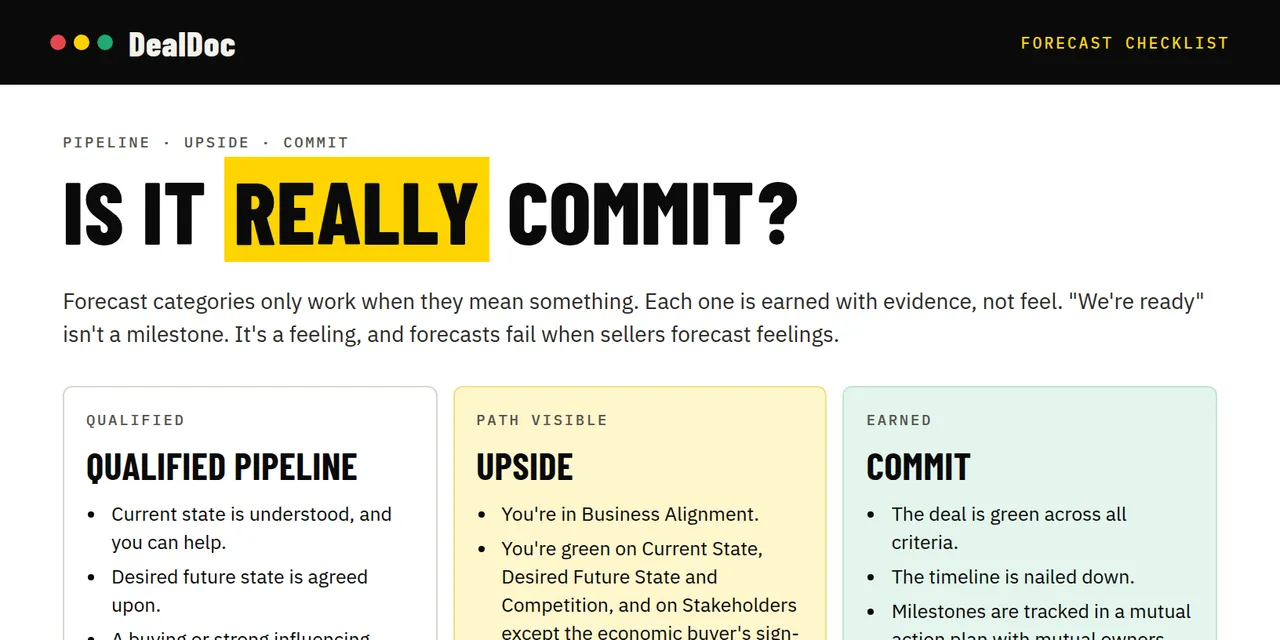
The three categories, defined by evidence:
- Qualified pipeline: current state is understood and you can help, desired future state is agreed, and a buying or strong influencing stakeholder is engaged. Without those three, it’s not qualified pipeline.
- Upside: you’re in Business Alignment, you’re green on Current State, Desired Future State and Competition, green on Stakeholders except the economic buyer’s sign-off (that usually comes at Go / No Go), and you’re working through the final business justification and the buying process.
- Commit: green across all criteria, the timeline is nailed down, and milestones are tracked in a mutual action plan with mutual owners and dates.
Eight things to confirm with evidence before you commit:
- Budget exists and is approved for this project.
- The executive sponsor is the one saying “ready.”
- Paperwork is in hand, and all asks are understood.
- First-pass redlines are back and look manageable.
- There’s alignment to a compelling event.
- There’s an escalation path and willingness to use it.
- You understand typical timelines and legal’s priority level.
- You have clear line of sight to the signature process, and the signer isn’t about to disappear. (I once had a signer take a month-long sabbatical right before signature.)
The downgrade rule, and a box to record the deal, the category you called, the evidence gaps and the link to the mutual plan.
How to use it
- Sellers: run it on every deal before you call it commit. If you can’t check all eight, it’s upside, and you know exactly what to go confirm. Your executive sponsor and procurement usually know the answers. If they don’t, that’s even scarier.
- Leaders: use it in the forecast call. If a deal is green across every criterion but sitting in upside, ask why. If it’s yellow on buying process and change justification but sitting in commit, ask why. That tension is where forecast accuracy is born.
Forecasting is often an emotional problem. Sellers want to believe, leaders want to hear yes, and everyone wants the number. Clear definitions turn it into a conversation about evidence.
For the full breakdown of each category, read Sales Forecast Categories: What Commit, Upside and Pipeline Must Prove.